/John Hayden
Bringing Meter Reads Into Valiflo: Any Source, One System
Mark had finally solved his biggest headache—managing utilities on a single platform with Valiflo. But one of the most critical aspects of any utility workflow is where the data comes from.
Mark's utility management was finally running from a single platform. The chaos of toggling between systems was behind him—data flowed cleanly from one step to the next, and his team was breathing easier than they had in years.
But as he dug deeper into his read data, a new problem surfaced.
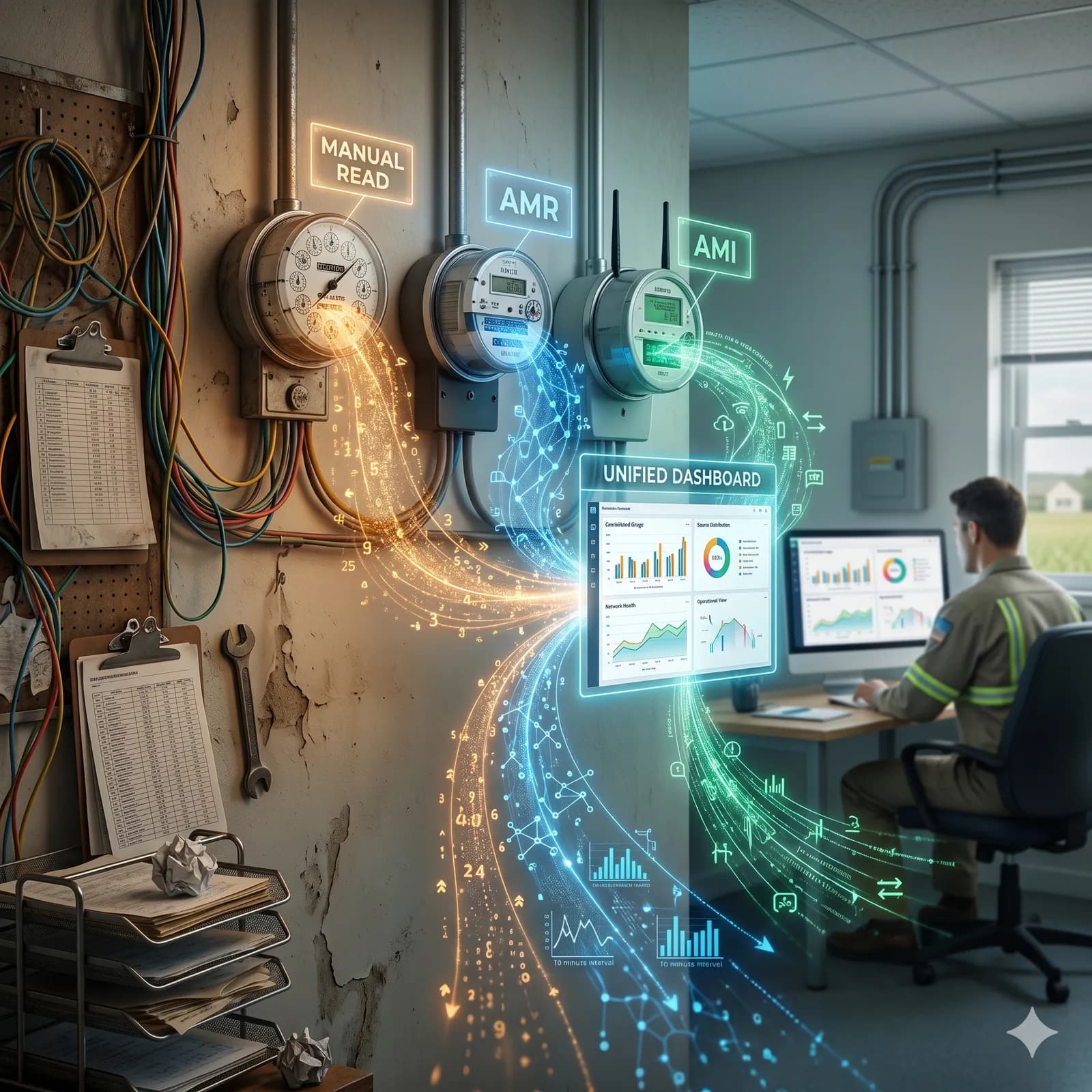
His city ran a mix of meters. Older neighborhoods still had manual-read meters, which meant a crew walked routes every month to collect reads by hand. A few years back, the city had added AMR meters to newer developments—those transmitted reads automatically over radio frequency. And just last year, a state grant had funded a pilot of smart AMI meters in one district, providing reads in near real-time.
Three different meter types. Three different read methods. Three different data formats arriving into Valiflo.
The reads were getting in—but cleaning them up was taking longer than it should. Manual reads came in on spreadsheets. AMR reads arrived as file exports from a separate reader device. AMI reads trickled in through a vendor portal. Mark's team was still spending hours every read period normalizing data before it was usable.
He had solved the system problem. Now he needed to solve the source problem.
When the Data Sources Don't Speak the Same Language
Mark mapped out what his team was actually doing every read period.
- Manual Read Processing Field crews collected reads on paper or handheld devices, then someone manually keyed or imported the data at the end of each route. One transposition error meant a misread account—and a frustrated resident calling about a confusing charge.
- AMR File Management The radio-read devices dumped data into proprietary file formats that required a separate import step. When the format changed after a vendor update, the import broke—and nobody noticed until the read cycle was already running late.
- AMI Vendor Dependencies The smart meter data lived in the vendor's portal first. Mark's team had to log in, export, reformat, and import before any of it touched Valiflo. Anything that happened in the vendor portal stayed invisible until someone ran that process manually.
Every read source was its own workflow. And none of them were connected.
One System, Any Source
What Mark needed wasn't a new way to manage each read source separately. He needed a platform that could accept all of them — and handle the translation automatically.
Valiflo was built for exactly this. Whether reads came in manually from a field crew, automatically from AMR devices, or in real-time from AMI meters, the platform normalized and ingested all of it without requiring a separate import process for each source type. Reads from any source flowed into the same system, validated against the same rules, and appeared in the same place.
For the first time, Mark's team wasn't managing data sources. They were managing utility operations.
Manual reads still came from crews in the field—but instead of importing a spreadsheet, the reads came in through Valiflo's mobile workflow, validated on entry and flagged if something looked off. AMR reads synced automatically. AMI data flowed in directly without the vendor portal detour.
The read period that used to consume two days of cleanup now closed in hours.
The Data Quality Upstream Changes Everything Downstream
Mark had always known that bad data upstream created bad outcomes downstream. A misread meter meant a wrong charge. A late import meant a delayed cycle. A broken file format meant a scramble to fix it before residents noticed.
What Valiflo's any-source architecture gave him wasn't just efficiency—it was confidence. Confidence that the reads flowing into his utility management workflows were clean, current, and complete. That what his residents received on their statements reflected what actually happened at their meters.
His city still had three types of meters. But it now had one source of truth.
Next, Mark would discover that the real power of clean, consistent read data wasn't just accuracy—it was what the system could do when reads came in frequently enough to catch problems before they became resident complaints. Stay tuned.